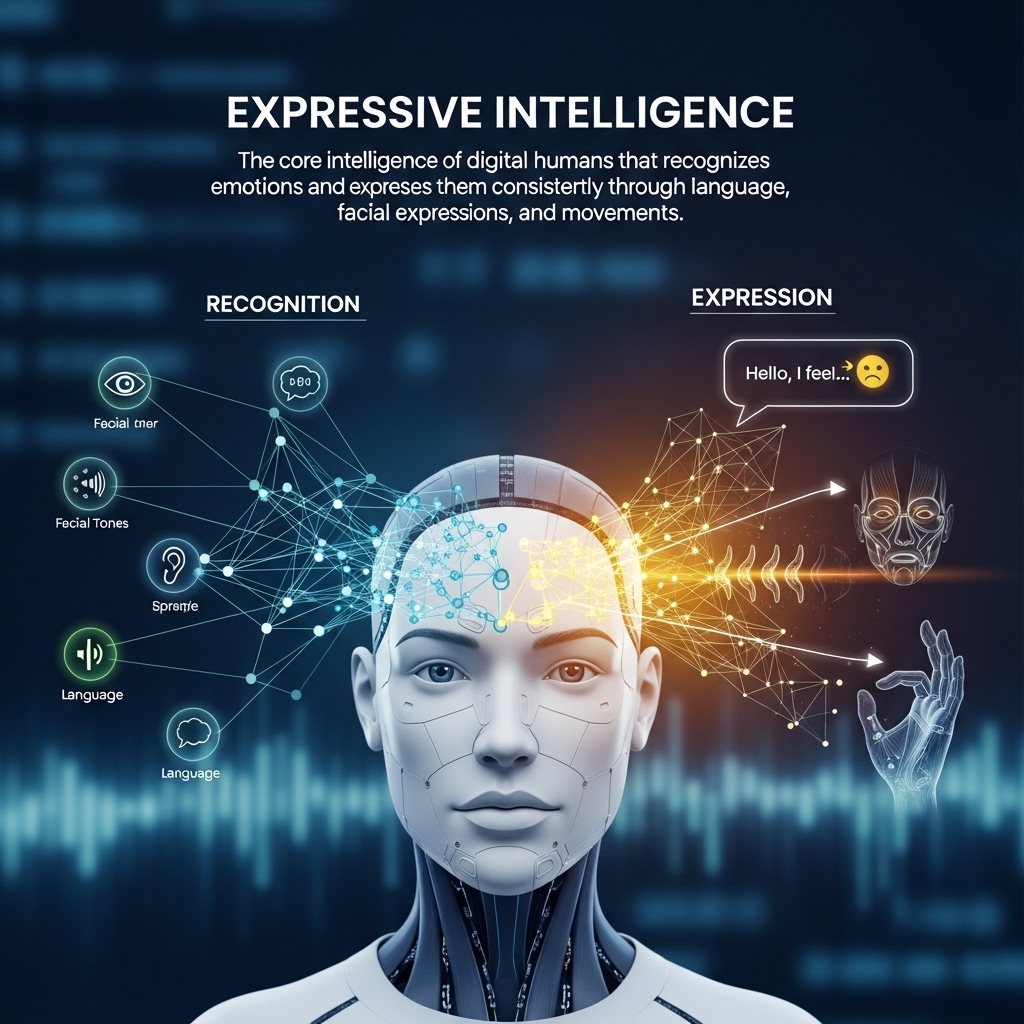
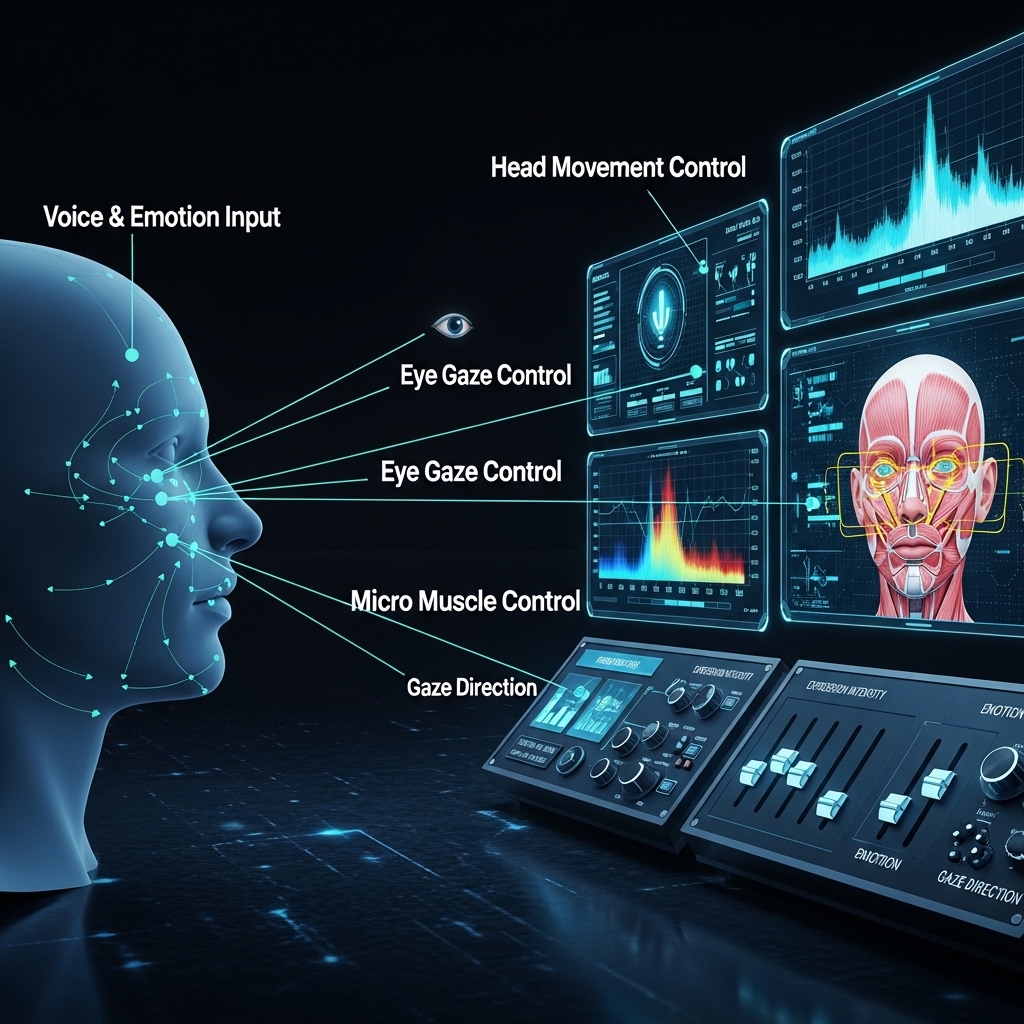
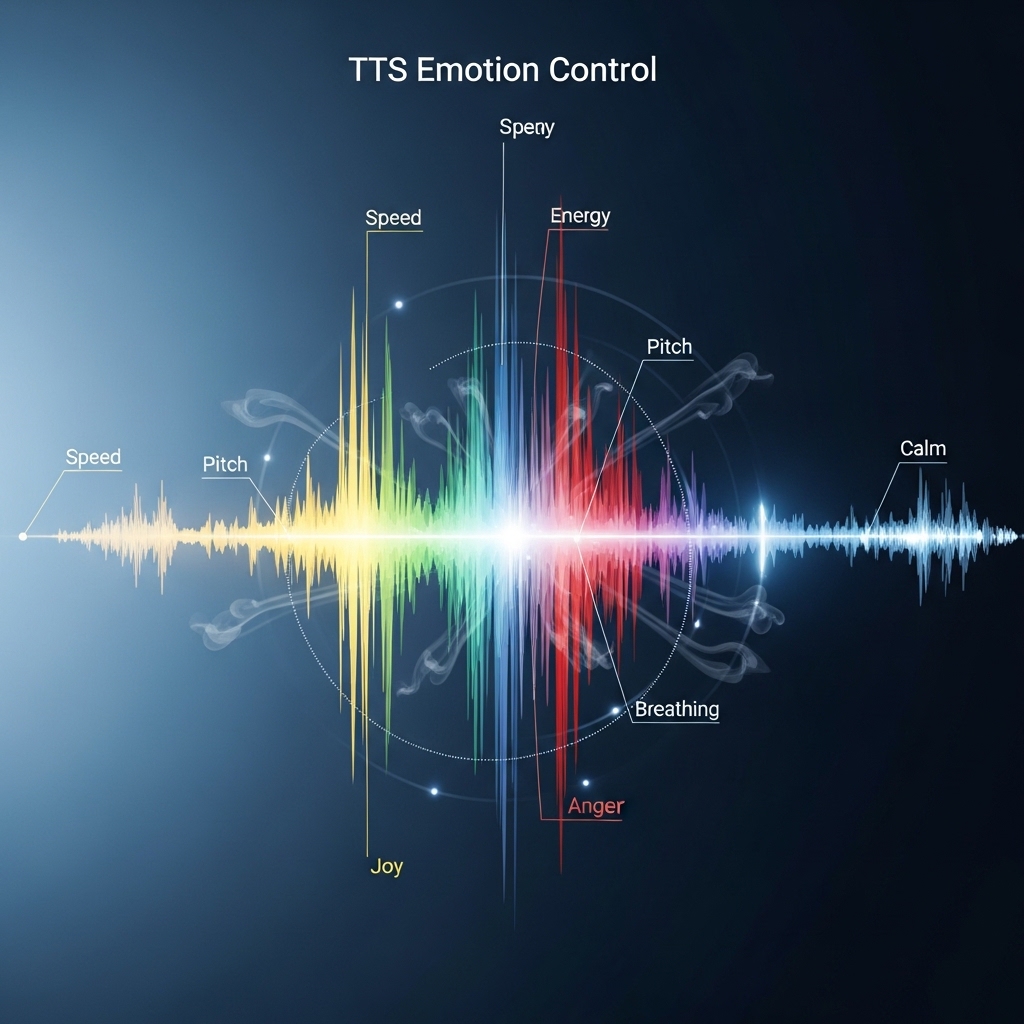
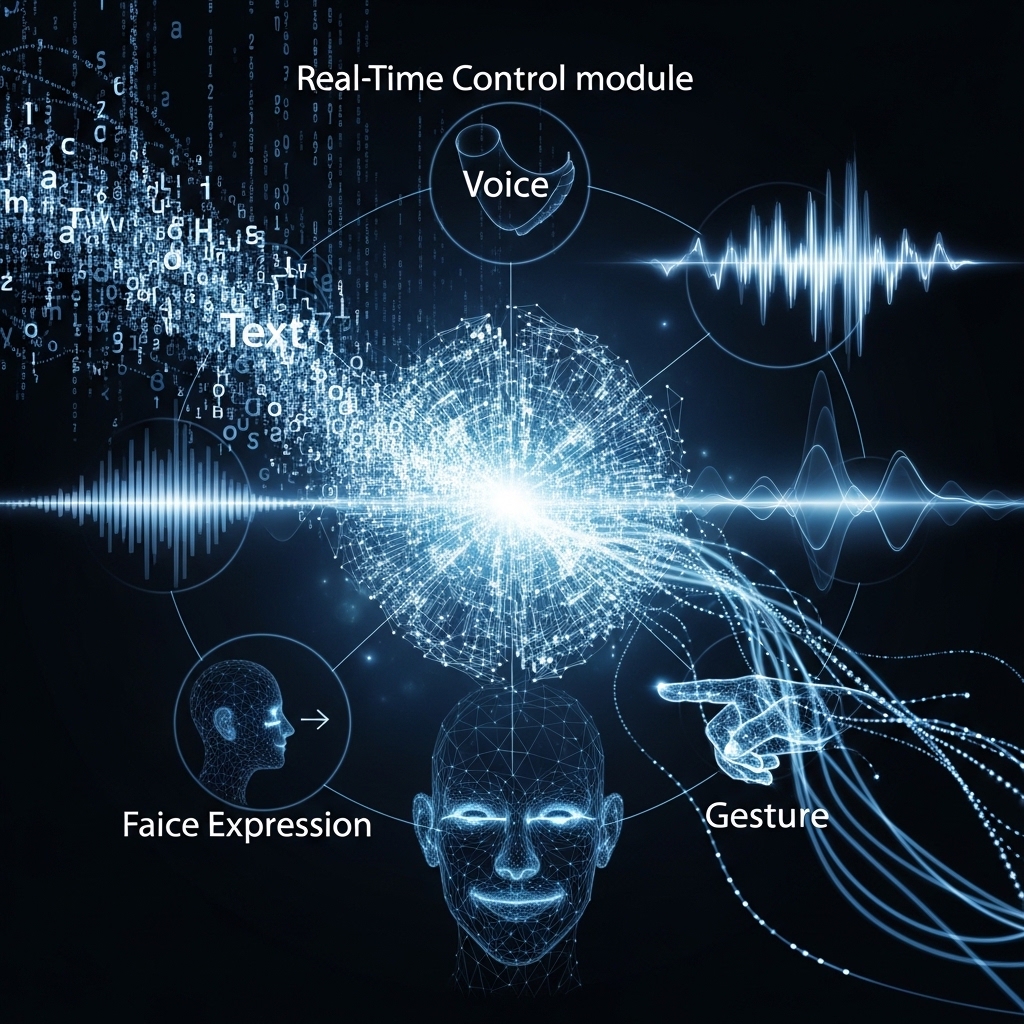
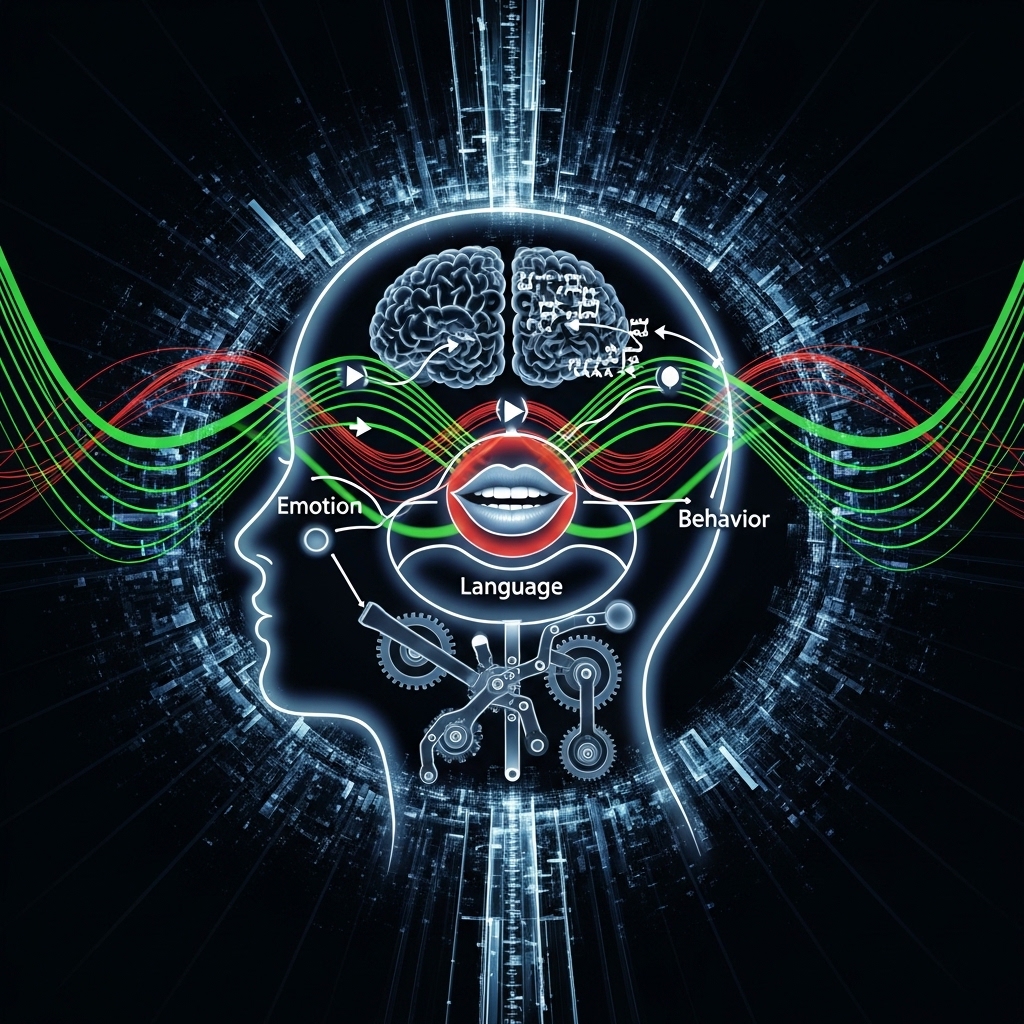
Emotive Acting AI Acting intelligence that expresses emotion through voice, face, and motion. 5 Expressive Intelligence An integrated intelligence technology that understands (perceives) emotions and naturally expresses them through language, voice, facial expressions, and gestures. Beyond simple response generation, it reflects emotional persistence, transition, and intensity changes to speak and perform in context. It is a core technology for IP-based digital humans, ensuring consistent character persona and emotional state to enable deeply immersive interaction. 4 Facial Acting Control System A module that controls facial expression, gaze, blinking, and subtle muscle movement in real time based on emotional state and utterance context. It regulates onset, sustain, and release timing of expressions according to emotional intensity and transition flow to achieve natural, non-exaggerated performance. This completes highly immersive emotional expression in synchronization with voice and dialogue. 3 Voice Emotion Synthesis / TTS Emotion Control A speech generation technology that precisely controls pitch, speed, intonation, stress, and timbre based on emotional state values. Rather than simple text reading, it reflects emotional intensity, persistence, and transition to produce natural, emotionally infused speech. This ensures digital humans speak with a consistent emotional tone aligned with context and persona. 2 Multimodal Synchronization Engine A control system that precisely aligns multiple expressive modalities—text, voice, facial expression, and gesture—along a shared temporal axis. It synchronizes facial acting and lip-sync in real time according to speech timing, prosody changes, and emotional intensity. This enables all expressive channels to share a unified emotional state and produce coherent, integrated performance. 1 Emotion–Language–Behavior Consistency Validation Logic A quality control system that cross-validates consistency among current emotional state values, generated dialogue, voice tone, and facial/gesture expressions. It compares emotional vectors with speech characteristics (vocabulary, intonation, speed) and facial acting parameters to detect mismatches or overexpression. This maintains immersion and credibility by correcting deviations in a character’s emotional flow.